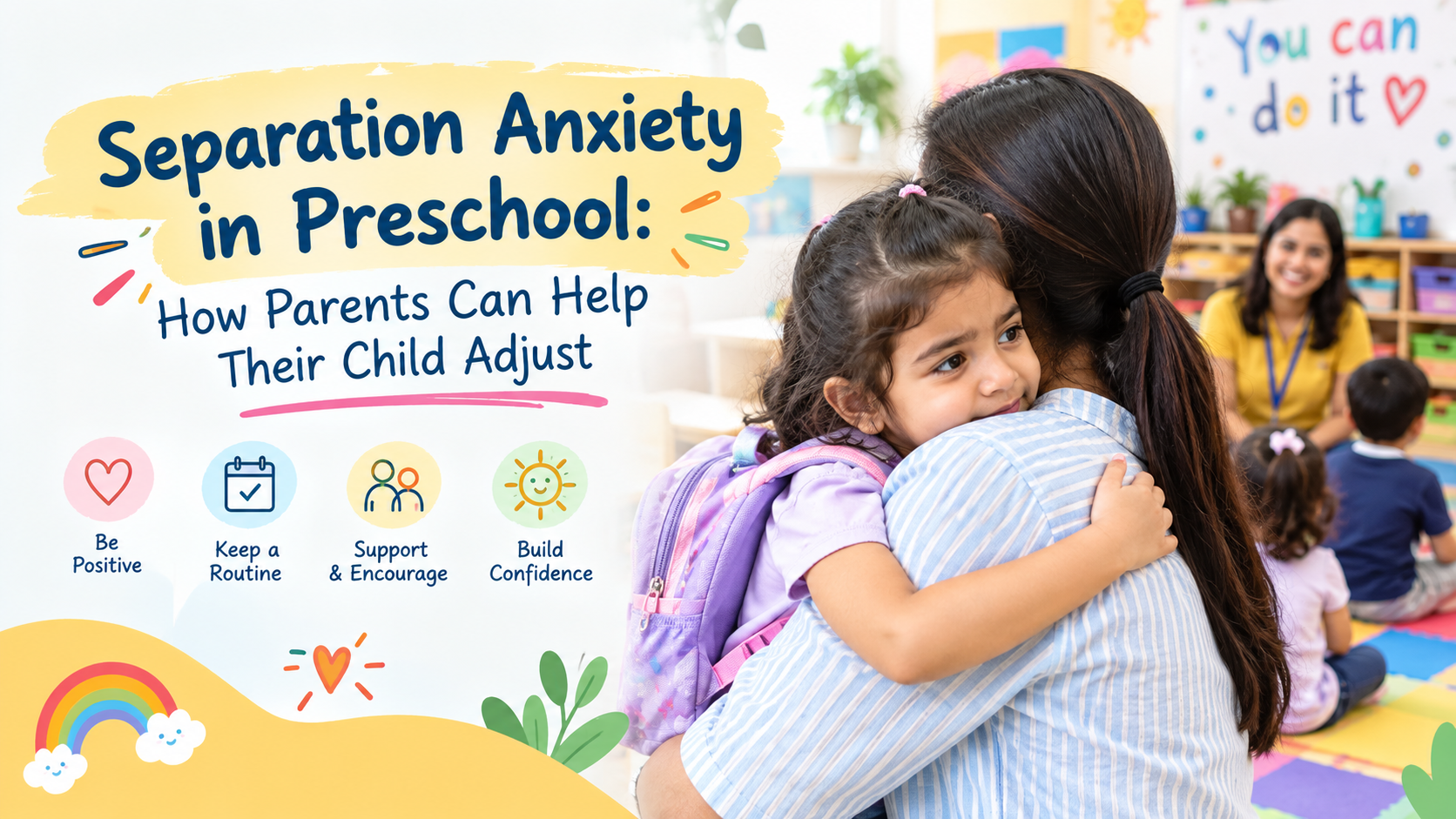
Starting preschool is a major milestone for both children
and parents. For some children, the first few days or weeks can bring
excitement, while others may feel nervous, cry at drop-off, or become upset
when their parents leave. These reactions are often connected to separation
anxiety.
Separation anxiety is a common part of early childhood
development. A child may feel uncomfortable being away from a parent or another
familiar caregiver, especially when entering a new environment with unfamiliar
teachers, classmates, routines, and surroundings. Although seeing your child
cry at preschool drop-off can be difficult, parents can take several simple
steps to make the transition easier.
With patience, consistency, reassurance, and a positive
routine, most children gradually become more comfortable with preschool. The
goal is not to make every feeling of worry disappear immediately, but to help
children understand that they are safe, their parents will return, and
preschool can be a happy place to learn and play.
What Is Separation Anxiety?
Separation anxiety is the worry or distress a child may
experience when separated from a parent or familiar caregiver. It can appear as
crying, clinging, refusing to enter the classroom, repeatedly asking when the
parent will return, or becoming quiet and withdrawn.
For preschool-age children, separation can feel especially
challenging because they are still developing their understanding of time.
Saying “I will come back later” may not mean much to a young child. A child may
need familiar routines and simple explanations to build confidence.
It is important for parents to remember that separation anxiety does not mean a child is weak, overly dependent, or unable to enjoy preschool. Children develop at different speeds, and some need more time than others to feel comfortable in a new setting.
Why Do Children Experience Separation Anxiety at Preschool?
Several factors can contribute to separation anxiety when a
child starts preschool.
A new environment is one of the most common reasons. A
classroom, new teacher, unfamiliar children, and a different daily routine can
feel overwhelming at first.
Changes at home can also affect a child's comfort level. A
move, change in family routine, illness, travel, or other major change may make
a child seek extra reassurance from parents.
Some children are naturally more cautious in unfamiliar
situations. They may need additional time to observe their surroundings before
participating.
Previous experiences can also influence how a child reacts.
If a child has had a difficult separation before, they may become more worried
about another goodbye.
Understanding the possible reason behind the anxiety can
help parents respond with patience rather than frustration.
Common Signs of Separation Anxiety
Every child expresses feelings differently, but parents may
notice some common signs when preschool begins:
• Crying or becoming upset at drop-off
• Holding tightly onto a parent or refusing to let go
• Asking repeatedly when the parent will return
• Complaining of a stomachache or headache before school
• Becoming unusually quiet or withdrawn
• Having difficulty sleeping before preschool
• Showing resistance to getting ready for school
• Becoming emotional again after returning home
These signs can be temporary and may reduce as the child
becomes familiar with the preschool routine. Parents should observe the overall
pattern rather than focusing on one difficult morning.
1. Prepare Your Child Before Preschool Starts
Preparation can make the transition less stressful. Before
the first day, talk positively and simply about preschool. Explain what the
child can expect, such as meeting a teacher, playing with other children,
eating a snack, and doing activities.
If possible, visit the preschool before the first day. Let
your child see the classroom and become familiar with the surroundings. Meeting
the teacher in advance can also make the environment feel less unfamiliar.
Parents can also read age-appropriate books about starting
preschool and use pretend play at home. For example, take turns being the
teacher and student. This gives the child an opportunity to practice common
preschool experiences in a comfortable environment.
2. Create a Consistent Morning Routine
A predictable morning routine can help children feel secure. Try to wake up, get dressed, eat breakfast, and leave for school at approximately the same time each day.
Keep mornings calm and avoid rushing whenever possible.
Prepare clothes, bags, shoes, and other items the night before.
A simple routine helps children understand what will happen
next. Over time, the routine becomes familiar, which can reduce uncertainty and
make preschool mornings easier.
3. Keep Goodbyes Short, Calm, and Positive
One of the most helpful strategies is to create a simple
goodbye routine. Give your child a hug, say a reassuring sentence, and leave
confidently.
For example: “Have fun at school. Your teacher will take
care of you. I will come back after school.”
Long emotional goodbyes can sometimes make the separation
more difficult because the child may become increasingly worried. Avoid repeatedly
returning to the classroom after saying goodbye unless the teacher specifically
asks you to do so.
Your calm behavior can also communicate that the preschool
environment is safe. Children often notice a parent's facial expression, tone
of voice, and body language.
4. Never Sneak Away
Parents may feel tempted to leave while their child is
distracted to avoid crying. However, suddenly disappearing can make a child
more worried about future separations.
Instead, use a consistent goodbye and tell your child that
you are leaving. Keeping your promise to return after school helps build trust.
If your preschool has a specific drop-off procedure, follow
the teacher's guidance. A consistent handover between the parent and teacher
can make the transition smoother.
5. Give Your Child a Small Comfort Item
Some preschools allow children to bring a small familiar
item from home. A family photo, small soft toy, or another approved comfort
object may help a child feel connected to home.
The item should be safe and suitable for the classroom.
Parents should check the preschool's policy before sending anything.
As children become more comfortable, they may naturally need
the comfort item less often.
6. Talk About Preschool Positively
Children often take emotional cues from adults. Try to talk
about preschool in a positive and natural way.
Instead of repeatedly asking, “Were you scared today?” try
questions such as:
“What did you play today?”
“Who did you sit with?”
“What was your favorite activity?”
“What did your teacher show you?”
These questions encourage children to remember positive experiences and talk about their day without making anxiety the main focus.
Avoid making unrealistic promises such as “You won't cry
today.” A better approach is to say, “You may miss me, and that's okay. Your
teacher will help you, and I will come back.”
7. Help Your Child Understand When You Will Return
Young children may not understand clock time very well.
Instead of saying, “I will come back at 1:30,” connect pickup time to a familiar
part of the preschool routine.
For example, you can say, “I will come back after lunch,” or
“I will come after your afternoon activity.”
Using the same explanation each day can make the routine
easier to understand. Most importantly, try to be consistent about pickup times
and communicate with the school if there is a change.
8. Practice Short Separations at Home
Parents can gradually help children become comfortable with
short periods away from them. Leave your child with a trusted family member for
a short time and return as promised.
Start with manageable periods and gradually increase them
when the child becomes comfortable. The purpose is not to force separation but
to give the child repeated experiences of learning that parents leave and
return.
This can help build confidence and independence over time.
9. Praise Brave and Independent Behavior
When your child handles a separation successfully,
acknowledge the effort. Instead of focusing only on whether the child cried,
praise behaviors such as entering the classroom, greeting the teacher, putting
away a bag, or joining an activity.
You might say, “You were nervous, but you walked into the
classroom and started playing. That was brave.”
Specific praise helps children understand what they did well
and encourages them to try again.
10. Work Together With the Teacher
Teachers play an important role in helping children adjust.
Share useful information about your child's routines, interests, comfort items,
and communication style.
Ask the teacher what usually helps your child settle after
drop-off. A teacher may guide the child toward a favorite activity, introduce
them to a friend, or give them a simple classroom responsibility.
Regular communication between parents and teachers can help
everyone use a consistent approach.
What Parents Should Avoid
Parents naturally want to make their child feel better, but
some responses can unintentionally increase worry.
Avoid threatening a child with statements such as “If you
don't stop crying, I will leave you here.” Avoid making preschool sound like a
punishment or repeatedly showing extreme worry at drop-off.
It is also better not to compare children. Saying “Look, other children aren't crying” may make a child feel embarrassed rather than confident.
Most importantly, avoid changing the routine every day
because of temporary crying. When children experience a predictable routine,
they have more opportunities to learn that separation is temporary and safe.
When Should Parents Seek Additional Support?
Separation anxiety is common during the transition to
preschool, but parents should pay attention if the distress is severe,
continues for a long period, or significantly affects the child's daily life.
If a child consistently refuses school, has persistent
physical complaints, experiences major sleep disruption, or remains extremely
distressed despite supportive routines, parents can discuss the situation with
the preschool teacher and the child's pediatrician or a qualified
child-development professional.
Every child is different, so support should be based on the
child's individual needs and circumstances.
A Simple Preschool Drop-Off Routine
Parents can use the same short routine each day:
1. Arrive calmly.
2. Help your child put away their belongings.
3. Give one hug or other familiar goodbye gesture.
4. Say a short reassuring sentence.
5. Hand your child to the teacher.
6. Leave confidently.
7. Return at the expected pickup time.
Keeping the routine predictable can help reduce uncertainty
and make each day a little easier.
Conclusion
Separation anxiety during the preschool years can be
challenging, but it is often a normal part of adjusting to a new environment.
Children need time to develop trust in their teachers, understand the daily
routine, and discover that preschool can be a safe and enjoyable place.
Parents can support this process by preparing their child,
maintaining a consistent routine, keeping goodbyes brief, avoiding sneaking
away, encouraging independence, and working closely with teachers.
Most importantly, be patient. A child may need several days or weeks to become comfortable. With steady support and positive experiences, many children gradually become more confident, enjoy classroom activities, and feel secure during the school day.
For more information, Visit us at: https://impressionsschools.com/